

By Jasmine Carter · Staff Writer
Published
Answer in brief
Telematics programs and usage-based insurance give 18-year-old drivers a mechanism to counteract group-based pricing surcharges by recording verified driving behavior such as smooth braking, safe speeds, and low mileage. By demonstrating cautious driving habits through smartphone applications or plug-in hardware, young motorists can secure meaningful policy discounts while establishing an independent driving record.
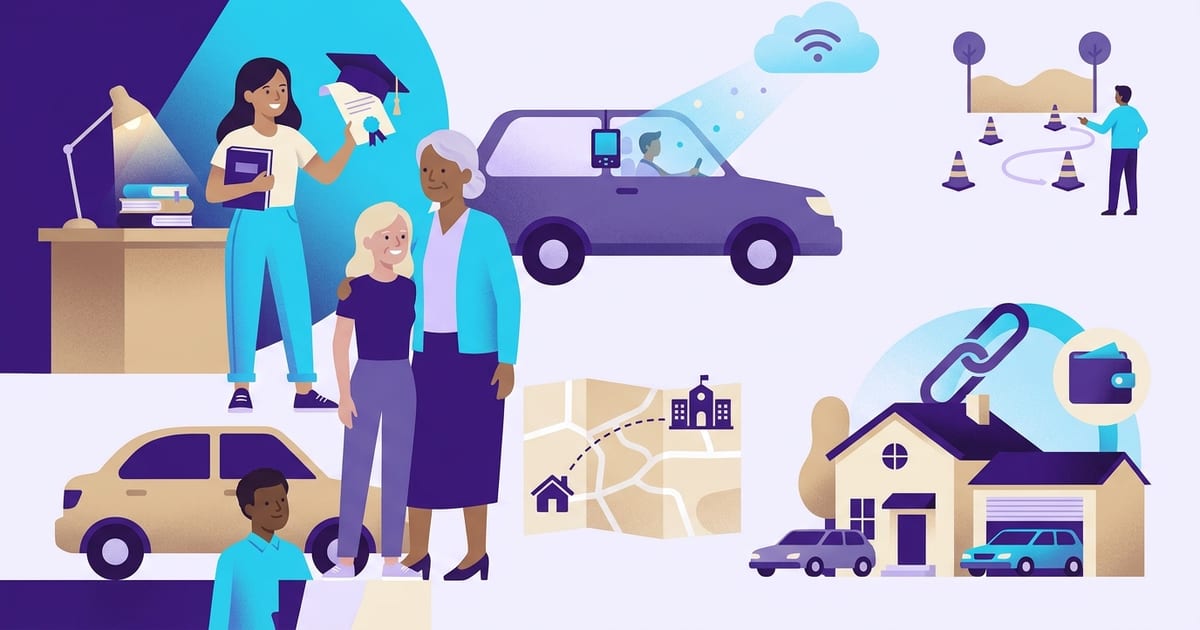
Under traditional actuarial tables, car insurance at 18 carries steep baseline pricing because young drivers belong to a high-risk age band. Industry crash statistics demonstrate that drivers between ages 16 and 19 experience fatal crash rates per mile driven that are just over three times higher than drivers age 20 and older. Because standard underwriting categorizes all 18-year-olds under this elevated collective risk profile, individual safe drivers frequently pay higher rates than their personal behavior justifies. Telematics programs bridge this gap by substituting generalized assumptions with real-time driving data.
How Usage-Based Telematics Programs Track Driving Performance
Why Telematics Programs Favor Safe 18-Year-Old Drivers
Insurers determine baseline pricing using broad rating factors including age, driving experience, location, vehicle type, and credit-based insurance scores. Because an 18-year-old lacks an established driving history, traditional underwriting relies heavily on demographic risk models. Usage-based insurance programs—often structured as pay-as-you-drive or pay-how-you-drive—permit young drivers to demonstrate individual responsibility. By maintaining disciplined driving metrics over a designated evaluation period, motorists can capture immediate enrollment credits followed by ongoing performance discounts at policy renewal.
Daily Habits That Maximize Telematics Discounts
- 1
Eliminate Abrupt Braking and Jackrabbit Starts
Anticipate traffic flow, scan ahead at intersections, and maintain generous following distances to avoid hard stops and sudden acceleration spikes.
- 2
Minimize High-Risk Driving Hours
Avoid operating vehicles during late-night windows—typically between midnight and 5:00 AM—when statistical crash severity rises dramatically.
- 3
Keep Mobile Phones Stowed While Driving
Enable automatic do-not-disturb driving modes. Telematics mobile applications detect screen touches and movement, which can penalize driving scores.
- 4
Control Total Commute and Leisure Mileage
Consolidate errands and utilize alternative transportation when possible; driving fewer total miles lowers your aggregate exposure and boosts discount tier eligibility.
Stacking Telematics with Traditional Policy Discounts
| Discount Strategy | Eligibility Requirement | Cost Reduction Mechanism | Can Be Combined With Telematics? |
|---|---|---|---|
| Telematics / Usage-Based | Enrollment in smartphone app or device tracking | 5% to 30% performance discount based on verified driving metrics | Yes; forms the foundation of modern behavioral pricing. |
| Good Student Discount | Maintaining a 'B' average (3.0 GPA) or honor roll standing | Reduces base liability and collision premium by 10% to 25% | Yes; stacks directly on active student driver policies. |
| Distant Student Discount | Attending school 100+ miles away without an insured vehicle | Lowers premium while preserving permissive driving rights on breaks | Yes; applies when resident student is away without primary car access. |
| Higher Collision Deductible | Selecting a $500 or $1,000 out-of-pocket loss threshold | Cuts physical damage portion of insurance premium by 15% to 40%+ | Yes; operational savings stack with behavioral discounts. |
Questions & answers
Can enrolling in a telematics program cause an 18-year-old's insurance rate to increase?
Depending on the specific insurer and state regulations, some usage-based programs reserve the right to apply a surcharge if recorded driving demonstrates high instances of hard braking, speeding, or extensive late-night driving. However, many voluntary programs guarantee that rates will not increase above the baseline quote.
How do telematics apps differentiate between being a driver and a passenger?
Mobile telematics apps use machine learning to detect movement patterns and allow users a designated window to review trips and flag rides where they were a passenger on public transit, a rideshare vehicle, or a friend's car.
Does a telematics app drain phone battery or use substantial mobile data?
Modern telematics applications utilize background location monitoring and low-energy sensors. Data uploads are typically scheduled when the device connects to Wi-Fi, minimizing cellular data consumption and battery drainage.
How quickly do telematics discounts apply to an 18-year-old's policy?
Most insurers offer an initial participation discount of 5% to 10% immediately upon enrollment and app activation. The full driving performance discount is typically calculated and applied at the policy's first renewal cycle, usually after 90 to 180 days of monitored driving.
Terms: Telematics (usage-based insurance), Age band, Good student discount, Premium, Household member
Sources and references
Legal figures on this page (minimum limits, filing periods, statutory benefits) are checked against the primary law or the state insurance regulator listed below. Links and figures last verified Nov 2026.
- Background on: Pay-as-you-drive auto insurance (telematics) — Insurance Information InstituteIndependent researchUsage-based and per-mile pricing models, what telematics programmes measure, and state limits on their use.
- Teenagers — Insurance Institute for Highway SafetyIndependent researchTeen crash risk, graduated driver licensing research and vehicle recommendations for young drivers.
- Graduated licensing laws by state — Insurance Institute for Highway SafetyIndependent researchState-by-state learner, intermediate and full-licence ages, night-driving and passenger restrictions.
- Fatality facts: Teenagers — Insurance Institute for Highway Safety (2024)Statistical dataFatal crash rate per mile driven for 16–19-year-olds is just over 3 times the rate for drivers 20 and older (2022 travel data); all-severity crash rate is over 4 times; risk is highest at 16–17.
- Drivers in fatal motor vehicle crashes by age, 2023 — Insurance Information Institute (2025)Statistical dataFatal-crash involvement per 100,000 licensed drivers: 42.40 (16–20), 35.34 (21–24), 28.97 (25–34), 24.18 (35–44), 21.70 (45–54), 19.45 (55–64), 15.44 (65–74), 16.63 (75+).
- What determines the price of an auto insurance policy? — Insurance Information InstituteConsumer guidanceRating factors: driving record, mileage, location, age, gender, vehicle, credit-based insurance score, coverage choices. Notes ZIP-code rating is prohibited in California and Michigan and gender rating is prohibited in seven states.
- Nine ways to lower your auto insurance costs — Insurance Information InstituteConsumer guidanceShop at least three quotes; raising a deductible from $200 to $500 can cut collision/comprehensive cost 15–30%, $1,000 can save 40%+; drop physical damage on cars worth under 10× the premium; bundling, low-mileage and good-student discounts.
- Auto insurance for teen drivers — Insurance Information InstituteConsumer guidanceAdding a teen to a parent's policy versus a separate policy; good-student and driver-training discounts; vehicle choice.
Practical guidance on this page is original editorial work. Cited sources support factual statements and do not endorse this site. Dollar ranges described as typical or illustrative are editorial estimates, not figures from these sources.