

By Tyler Brooks · Editor
Published
Answer in brief
An 18-year-old driver behind the wheel of an older car can often lower annual premiums significantly by removing collision and comprehensive coverages once the physical damage premium exceeds 10% of the vehicle market value. Before dropping physical damage entirely, young motorists should review their emergency savings, confirm loan obligations, and test higher deductible thresholds to balance cost against out-of-pocket exposure.
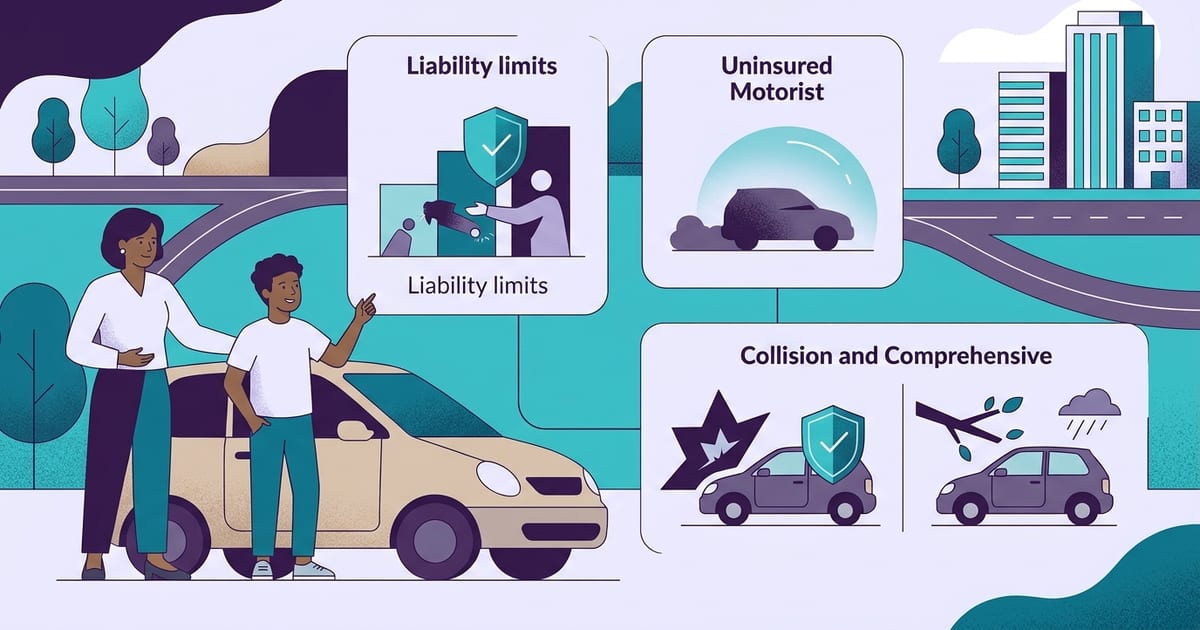
When purchasing car insurance for 18-year-olds, motorists must decide whether to carry full coverage or restrict their policy to state-mandated liability limits. Full coverage combines liability with collision coverage and comprehensive coverage, which pay for repairs to your own vehicle regardless of fault. However, for an inexperienced operator facing elevated baseline premiums, carrying physical damage protection on an aging vehicle can lead to annual insurance payments that rapidly eclipse the car's actual market value. Determining whether to keep physical damage coverages requires evaluating vehicle valuation, potential insurer payouts, and available savings.
The 10-to-1 Valuation Rule for Physical Damage Coverage
| Vehicle Market Value | Illustrative Annual Physical Damage Cost | 10% Value Benchmark | Recommended Coverage Action |
|---|---|---|---|
| $2,000 | $650 to $900 | $200 | Drop collision and comprehensive; maintain liability and uninsured motorist. |
| $4,000 | $750 to $1,050 | $400 | Strong candidate to drop collision; or select a $1,000 deductible. |
| $7,500 | $850 to $1,200 | $750 | Keep physical damage coverage; consider adjusting deductible to $500 or $1,000. |
| $12,000 | $1,000 to $1,450 | $1,200 | Maintain collision and comprehensive coverage to protect underlying asset value. |
Adjusting Deductibles Before Dropping Coverages Outright
Young drivers reluctant to drop physical damage protection entirely have an intermediate option: adjusting their deductible. Insurance industry guidance demonstrates that increasing a collision and comprehensive deductible from $200 to $500 can reduce the physical damage portion of an insurance premium by 15% to 30%. Moving to a $1,000 deductible can generate savings of 40% or more. For an 18-year-old motorist maintaining an active vehicle with moderate market value, carrying a higher deductible retains catastrophic coverage against a total loss while substantially softening the ongoing premium burden.
Four Essential Steps Before Removing Collision and Comprehensive
- 1
Determine Your Vehicle's Actual Cash Value
Look up the private-party market value of your vehicle using established automotive valuation guides. Insurers calculate total loss settlements based on actual cash value minus your deductible, not your original purchase price.
- 2
Isolate Your Physical Damage Costs
Review your policy declarations page to isolate the exact dollar amount allocated to collision and comprehensive coverages, separating them from mandatory bodily injury and property damage liability charges.
- 3
Verify Liquid Emergency Savings
Confirm you possess sufficient cash reserves to replace your transportation or cover major repairs independently if your vehicle is damaged or totaled in an at-fault incident.
- 4
Test Higher Deductible Scenarios First
Before stripping collision and comprehensive completely, request policy quotes with a $500 and $1,000 deductible to evaluate if premium savings can be achieved while preserving structural loss protection.
Crucial Protections to Retain on Older Vehicles
Dropping collision and comprehensive does not mean stripping your policy down to bare legal floors. State financial responsibility statutes require basic liability limits, but minimums are designed as a starting threshold rather than comprehensive protection. An 18-year-old driver dropping physical damage should consider maintaining robust bodily injury and property damage liability limits, alongside uninsured motorist coverage. Uninsured motorist coverage defends against drivers operating without compulsory insurance, providing essential bodily injury and medical protection regardless of your vehicle's physical damage status.
Questions & answers
Will dropping collision coverage cancel my car insurance policy entirely?
No. Dropping collision and comprehensive simply transitions your policy toward liability-oriented protection. You remain fully insured for damage or injuries you cause to others, preserving legal compliance under state financial responsibility laws.
What happens if an 18-year-old has an accident without collision coverage?
If you are at fault in a collision, the insurer pays for the other party's bodily injury and property damage up to your policy limits, but you receive no compensation for repairs to your own vehicle. If the other driver is at fault, their property damage liability coverage is responsible for repairing your car.
Does comprehensive coverage cost as much as collision coverage?
Comprehensive coverage is typically much cheaper than collision coverage because it covers non-collision events such as theft, vandalism, weather damage, and animal strikes. Some drivers drop collision while choosing to retain comprehensive on older vehicles.
How do I know if my car is worth less than 10 times my physical damage premium?
Review the collision and comprehensive portions of your annual insurance bill. If collision and comprehensive cost $1,000 per year and your vehicle is worth $4,000, your physical damage premium is 25% of the car value, exceeding the 10% benchmark and indicating that dropping physical damage could save money.
Terms: Full coverage, Collision coverage, Comprehensive coverage, Deductible, Inexperienced operator
Sources and references
Legal figures on this page (minimum limits, filing periods, statutory benefits) are checked against the primary law or the state insurance regulator listed below. Links and figures last verified Nov 2026.
- Teenagers — Insurance Institute for Highway SafetyIndependent researchTeen crash risk, graduated driver licensing research and vehicle recommendations for young drivers.
- Automobile financial responsibility limits by state — Insurance Information Institute (2023)Statistical dataCompulsory coverages and minimum liability limits by state (table dated December 2023 — several states have raised limits since; see statute entries).
- 2019–2023 Auto Insurance Database: average premium supplement — National Association of Insurance Commissioners (2025)Statistical dataCountrywide average expenditure $1,281 in 2023 (+13.98%); combined average premium $1,438; state tables for liability, collision and comprehensive.
- Insurance losses by make and model — Highway Loss Data InstituteStatistical dataRelative claim frequency and severity by vehicle under collision, property damage, comprehensive, PIP, MedPay and bodily injury coverages.
- Nine ways to lower your auto insurance costs — Insurance Information InstituteConsumer guidanceShop at least three quotes; raising a deductible from $200 to $500 can cut collision/comprehensive cost 15–30%, $1,000 can save 40%+; drop physical damage on cars worth under 10× the premium; bundling, low-mileage and good-student discounts.
- What is covered by a basic auto insurance policy? — Insurance Information InstituteConsumer guidanceDefines bodily injury and property damage liability, MedPay, PIP, uninsured/underinsured motorist, collision, comprehensive and glass coverage.
- How much auto coverage do I need? — Insurance Information InstituteConsumer guidanceWhy state minimums are a floor; choosing liability limits that protect assets; when collision and comprehensive are worth keeping.
- Is it legal to drive without insurance? — Insurance Information InstituteConsumer guidanceEvery state requires drivers to demonstrate financial responsibility; in most states insurance is the mandatory way to do so.
Practical guidance on this page is original editorial work. Cited sources support factual statements and do not endorse this site. Dollar ranges described as typical or illustrative are editorial estimates, not figures from these sources.
Entry
Why 18-Year-Olds Need Uninsured Motorist Coverage
Learn why uninsured motorist coverage is essential for 18-year-old drivers, what state data shows about uninsured rates, and how to verify your limits.
Parent guide
What Coverage an 18-Year-Old Needs
Liability limits, uninsured motorist, collision and comprehensive for an 18-year-old's first policy—what matters and what to skip.